
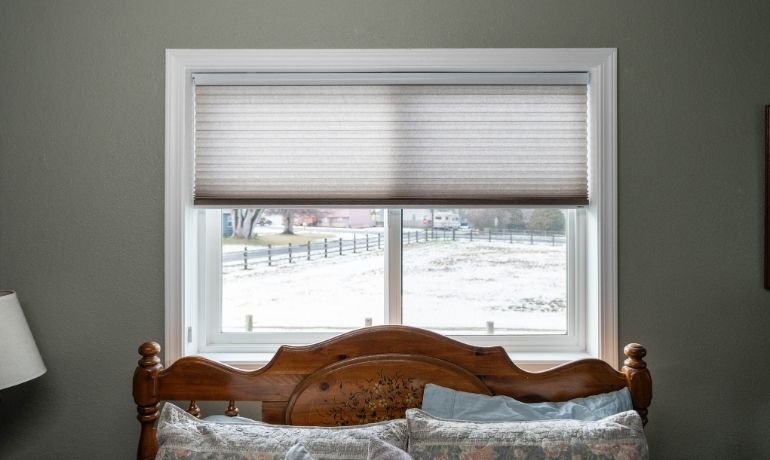
When winter arrives in North Idaho and Eastern Washington, keeping your home warm can become a daily battle. Cold temperatures, snow, freezing rain, and long stretches of gray weather all put extra demands on your heating system. Your windows can also play a surprisingly important role in how comfortable your home feels and how hard your furnace has to work.
People are often surprised how much the right window coverings can affect indoor air temperatures. Blinds provide an additional barrier between your warm interior and the outdoors. While windows are notorious for transferring cold air into your home on winter days, that layer of air trapped between your window and a window blind is a very effective insulator, blocking cold air from entering your room.
At Best Blinds & Awnings, we help homeowners choose from several types of custom window treatments that offer varying combinations of insulation, light control, privacy, and style. Here are some things to consider when deciding what would be most beneficial for your home’s comfort.
Why Window Coverings Matter in Winter
Indoor and outdoor temperatures meet at windows. While today’s double- and triple-paned windows perform much better than older single-paned windows in terms of insulation value, they do not provide the sort of heat barrier that insulated walls and sealed doors provide. Even the best windows can let in the cold during a North Idaho winter, particularly after sunset.
We experience substantial winter temperature swings in the Inland Northwest. Winter conditions can bring temperatures around or below freezing along with significant snowfall. Keeping heat inside in that kind of weather is asking a lot of windows, and that’s where the window coverings you choose can make a significant difference. The right blinds can create an important layer of insulation between the window glass and your living space that significantly improves comfort and reduces unwanted heat transfer.
1. Cellular/Honeycomb Shades: A Top Choice for Insulation
If your primary concern is winter energy efficiency, then cellular or honeycomb shades deserve serious consideration. Cellular shades use a “honeycomb” design of two materials connected at intervals to create air pockets along the entire length of the shade. Those pockets act as an insulating layer, helping reduce heat transfer from a room out through the window. They’re particularly useful in:
- Bedrooms that feel chilly at night
- Living rooms with large windows
- Home offices where you spend several hours each day
- Rooms with windows that receive little direct winter sunlight
- Homes where maintaining consistent indoor temperatures is a priority
Cellular shades are also available in different opacity levels, including light-filtering and blackout options, allowing you to balance insulation with the amount of natural light that you prefer.
2. Roller Shades: Flexible Year-Round Performance
Roller and solar shades are another option available from Best Blinds & Awnings. Their clean appearance makes them suitable for virtually any decorating style, particularly since they are available in a wide range of fabrics and opacity levels, providing maximum flexibility for different rooms in terms of light control and coordination with existing decor.
During winter, roller shades can be pulled down, creating a layer of air between a cold window and the shade. That air pocket between your heated interior and the cold window is a very efficient insulator, because still air does not easily or quickly transfer heat. Blackout roller shades can be especially useful in bedrooms or other spaces where you want complete light control.
Many people also appreciate blackout shades in summer, when extended hours of sunlight in these northern latitudes can make it hard to fall asleep, wake you up too early, or allow too much glare on computer and television screens.
3. Faux and Genuine Wood Blinds: Practical Comfort and Light Control
Faux wood blinds provide the classic appearance of wood while using durable materials designed for everyday use. They are especially useful for kitchens and bathrooms where you prefer the look of wood, but where moisture levels and cleaning needs make genuine wood impractical.
For other rooms that don’t have moisture concerns, genuine wood blinds always look great, especially in this region where natural wood elements are common architectural and design features. However, genuine wood requires more care, especially for windows that receive a lot of direct sunlight and heat.
Faux and wood blinds aren’t designed specifically as an insulating shade in the same way cellular shades are, but their adjustable slats give homeowners precise control over incoming light and privacy, and their classic look works with almost any decor. On sunny winter days, the slats can be adjusted to make the best use of available daylight, and closing the blinds provides good privacy and additional insulation value.
4. Banded, Vertical & Silhouette® Blinds
Banded shades, vertical blinds, and Silhouette® blinds are especially useful when the shape, size, or function of a window makes a different style more appropriate. For example, vertical blinds can make sense for large windows or sliding glass doors, while banded shades provide adjustable light and privacy through alternating sheer and opaque sections.
The best window treatment for every room won’t necessarily be the one with the highest insulation potential, because nearly all window coverings provide different levels of insulation. Each choice will have to meet your priorities, with insulation being one of the factors, although, in some cases, it may be the most important factor if you have a room that never seems to be able to maintain a consistent comfortable temperature.
The best covering should address multiple interests, including how well it works for the style and function of the room, how well it fits for a particular window’s size and shape, and how well it manages light control and privacy.
Find the Right Winter Window Treatments for Your Home
When asking the question, “What are the best blinds for winter energy savings?” consider all the factors and compare different options to get the best balance of insulation value, visual appeal, and features. If maximum insulation is your goal, cellular and honeycomb shades are a very strong choice. Roller shades provide versatility, while faux wood, banded, vertical, and Silhouette blinds offer different combinations of insulation, light control, privacy, style, and functionality.
Best Blinds & Awnings provides in-home consultations, free measuring, personalized recommendations, and professional installation for homeowners throughout Coeur d’Alene, the LC Valley, and Spokane. Contact us today to schedule an appointment. We are a family-owned local business tuned to the needs of our Inland Northwest clientele. One of our custom-fit window treatments can do more than finish the look of a room. The right choice can help make cold winter mornings more comfortable while giving you better control over light and indoor temperatures throughout the year.
If you’re preparing your home for another Inland Northwest winter, now is a good time to evaluate which windows leave you feeling the chill, and explore whether a better window covering could make your home more comfortable.